
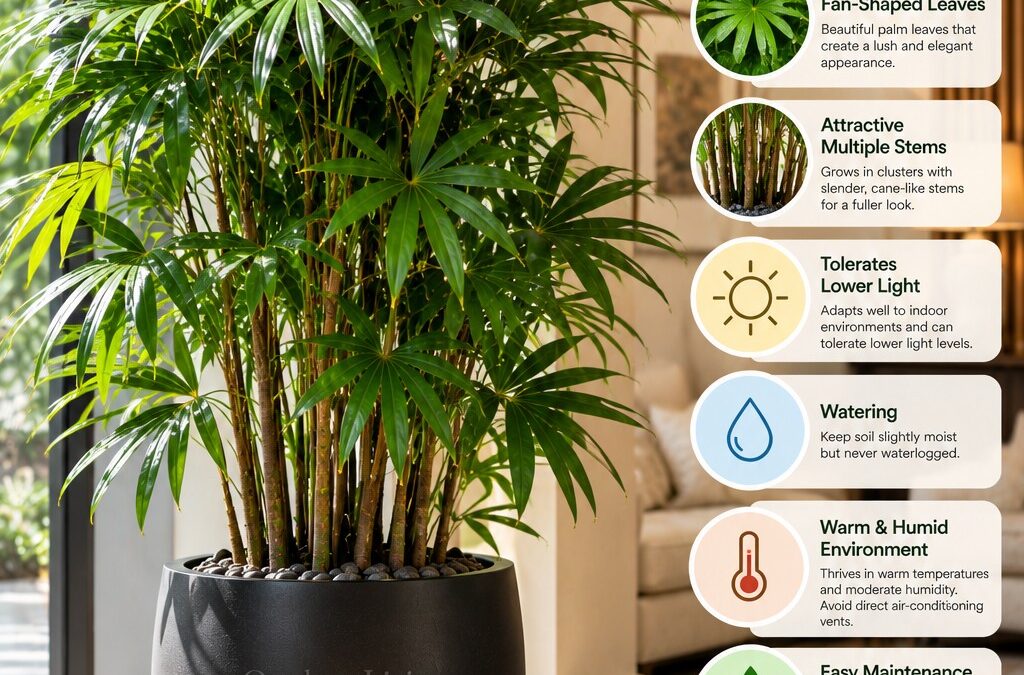
Characteristics & How to Maintain It
Rhapis excelsa, commonly known as the Lady Palm, is an elegant evergreen palm admired for its beautiful fan-shaped leaves, slender stems and lush appearance.
Unlike palms with long, arching fronds, the Lady Palm has a more structured and refined appearance. This makes it an excellent choice for homes, offices, hotels, reception areas, restaurants and other indoor spaces.
It is also relatively slow-growing, which makes it particularly useful for indoor landscaping because it can remain attractive in the same location for many years with proper care.
Characteristics
Distinctive Fan-Shaped Leaves
One of the easiest ways to recognise Rhapis excelsa is by its attractive fan shaped foliage.
Each leaf is divided into several broad, finger-like segments, creating a distinctive tropical appearance without looking excessively large or overpowering.
Its rich green foliage can add softness and texture to an otherwise plain interior.
Attractive Multiple Stems
Rather than producing one large trunk, Lady Palms grow in clusters of slender, cane-like stems.
As the plant matures, new shoots emerge from the base, gradually creating a fuller and denser plant.
These stems are covered with fibrous material that gives the palm additional character.
Slow Growing
Rhapis excelsa is generally a slow-growing palm.
For indoor use, this can be an advantage. It means the plant does not quickly become too large for its allocated space and requires less frequent reshaping than some faster-growing species.
Tolerates Lower Light
One of the Lady Palm’s greatest advantages is its ability to tolerate lower indoor light levels better than many palms.
It still appreciates good indirect light, but it does not necessarily need to sit directly beside a sunny window.
This makes Rhapis excelsa particularly useful for interior landscaping.
Elegant & Premium Appearance
The Lady Palm has a very different character from the Areca Palm.
While an Areca creates a soft, feathery tropical effect, Rhapis has a stronger, more architectural appearance.
A mature Rhapis in a beautiful black, white or stone planter can become a sophisticated feature in a modern interior.
How to Maintain Rhapis excelsa
1. Light
Lady Palms perform well in bright, indirect light but can also tolerate moderate and lower-light indoor conditions.
Avoid exposing an indoor-grown Rhapis to intense direct afternoon sunlight, which can damage or scorch the leaves.
For homes, a bright living area with filtered natural light is ideal.
2. Watering
Rhapis enjoys consistent moisture, but the soil should never remain waterlogged.
Before watering, check the soil with your finger. If the upper layer has started to dry, it is usually time to water.
Water thoroughly and allow excess water to drain away.
Do not simply water the plant every day according to a fixed schedule. Indoor watering requirements change depending on the amount of light, temperature, air-conditioning and size of the planter.
Remember: slightly moist is good, constantly soaking wet is not.
3. Temperature & Humidity
Rhapis excelsa performs well in warm indoor conditions and appreciates moderate humidity.
Malaysia’s natural climate suits the plant well, but indoor air-conditioning can create a cooler and considerably drier environment.
Avoid placing the palm directly underneath an air-conditioning vent where it will receive a constant stream of cold, dry air.
4. Fertilising
Apply a suitable balanced fertiliser periodically during active growth.
Because Rhapis is naturally slow growing, there is no need to over-fertilise it in an attempt to force faster growth.
Consistent, moderate feeding is preferable.
5. Pruning
Lady Palms require relatively little pruning.
Remove completely brown, yellow or damaged leaves when necessary. Old or unhealthy stems can also be carefully removed near the base.
Avoid excessive pruning of healthy green foliage.
Occasional trimming and cleaning will usually be sufficient to maintain its attractive appearance.
6. Cleaning the Leaves
The broad fan-shaped leaves can gradually collect dust indoors.
Gently wipe the foliage with a soft damp cloth or carefully rinse the leaves when necessary.
For plants displayed in homes, reception areas or commercial interiors, clean foliage makes a noticeable difference to the overall appearance.
Common Problems
Brown Leaf Tips
Brown tips can occur because of dry air, inconsistent watering, mineral accumulation or environmental stress.
If this occurs regularly, review the plant’s watering and location.
Yellow Leaves
An occasional older yellow leaf is normal.
However, widespread yellowing may indicate excessive watering, poor drainage, insufficient light or another problem affecting the root system.
Dry or Crispy Leaves
Check whether the plant is positioned too close to an air-conditioning vent or receiving excessive direct sunlight.
Pests
Like many indoor palms, Rhapis can occasionally develop problems with scale insects, mealybugs or spider mites.
Inspecting the leaves and stems regularly allows problems to be detected before they become serious.
Where Should You Place a Lady Palm?
Rhapis excelsa works beautifully in:
- Living rooms
- Entrance areas
- Reception areas
- Executive offices
- Hotel lobbies
- Restaurants
- Meeting rooms
- Bright corridors
- Beside sofas and lounge furniture
- Indoor courtyards
A mature Lady Palm can also be used to soften architectural features such as pillars, glass walls and empty corners.
Rhapis excelsa vs Areca Palm
Although both make excellent indoor palms, they create very different effects.
The Areca Palm has fine, arching foliage and produces a softer, more obviously tropical appearance.
Rhapis excelsa has broader fan-shaped leaves and a denser, more structured form.
For interiors where you want something elegant, neat and understated, the Lady Palm is an excellent choice.
Why We Recommend Rhapis excelsa
At Outdoor Living Concepts, we particularly like Rhapis excelsa because it combines beauty, durability and versatility.
It doesn’t demand attention with bright flowers or enormous leaves. Instead, it provides rich green foliage and an elegant architectural form that complements the surrounding interior.
And because it grows relatively slowly and tolerates indoor conditions well, a properly maintained Rhapis can remain an attractive feature for many years.
Whether you need one statement plant for your home or a complete indoor planting arrangement for a commercial space, the right plant and planter combination can completely change the atmosphere of an interior.
Bring Nature Indoors
Outdoor Living Concepts provides indoor plants for rental or purchase, together with professional plant maintenance services.
Let us take care of the watering, pruning and ongoing maintenance while you simply enjoy the greenery.
Outdoor Living Concepts
Bringing living greenery into your space.
For plant rental or purchase, contact us at 012-235 8565.